So you want to visit Salamanca? Known across Spain as the Golden City, a nickname earned by the way its sandstone buildings glow at sunset and sunrise, Salamanca has been a serious centre of learning since 1218, when its university, one of the oldest in Europe, was founded.
That academic weight has never made the city feel stuffy, a large student population keeps Salamanca genuinely lively rather than museum quiet, and its Plaza Mayor is widely considered one of the most beautiful squares anywhere in Spain. Add some of the finest Plateresque architecture in the country, ornately carved facades that reward slow, close up looking, and Salamanca earns its reputation as one of Castilla y Leon’s unmissable stops.
AT A GLANCE
Capital of the region
Salamanca is not the regional capital, that is Valladolid, but it is the capital of Salamanca province.
Language
Spanish, with a large international student population meaning English is more widely spoken here than in many similarly sized Spanish cities.
Currency
Euro.
Flight time from the UK
There is a small regional airport, Matacan, but the practical route for most visitors is to fly into Madrid, around two and a half hours from the UK, and continue by train or road, a journey of around ninety minutes to Salamanca.
Best time to visit
May, June, September and October offer warm, comfortable weather for sightseeing. Salamanca’s large student population means the city has a noticeably different, quieter atmosphere during summer holidays than during term time.
Time difference
One hour ahead of the UK.
Climate and Weather
Salamanca has a continental climate, with hot summers, occasionally passing 35 Celsius on the warmest days, and cold winters. Rainfall is generally moderate and spread across spring and autumn.
Getting There
Madrid is the practical gateway, with direct flights from a wide range of UK airports, followed by a train or road journey of around ninety minutes to Salamanca. Book train tickets in advance where possible for better prices.
TOP TEN THINGS TO DO
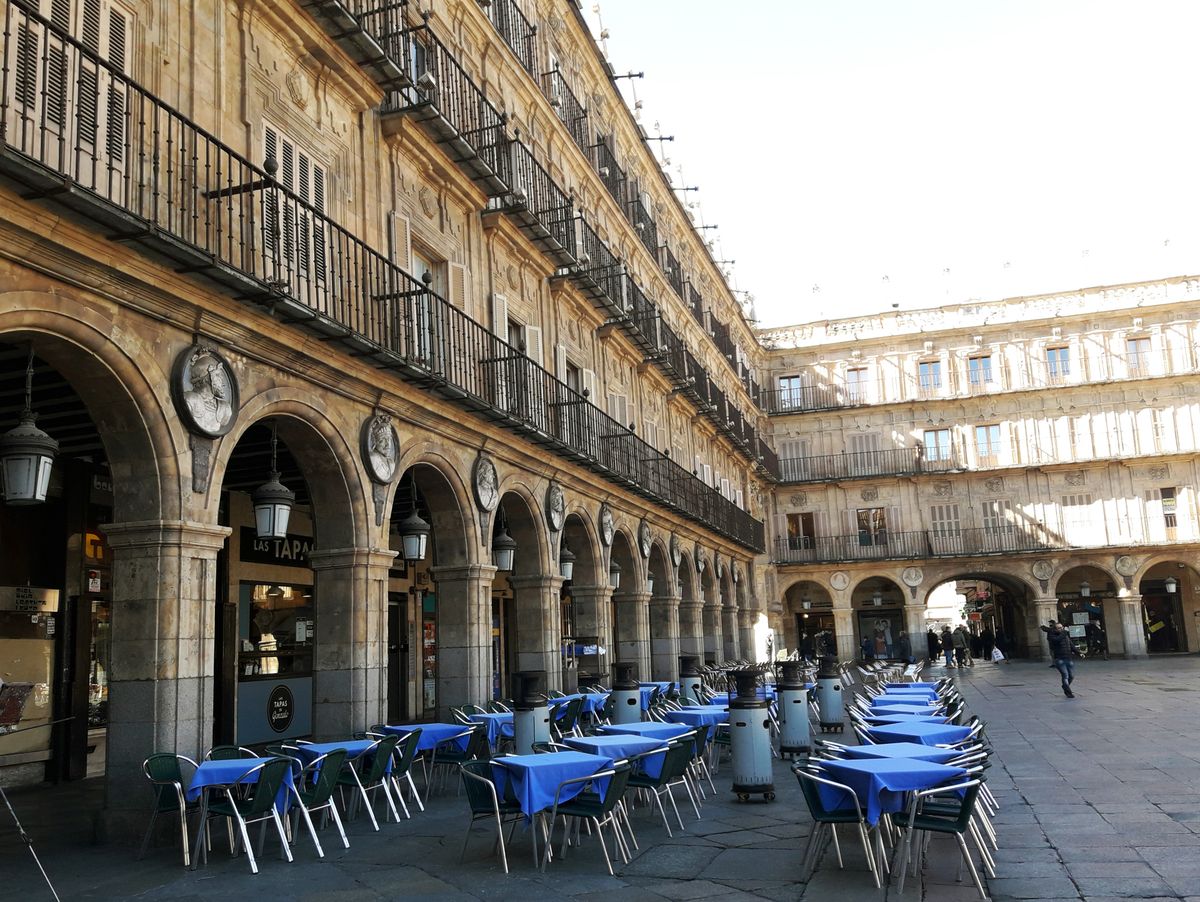
Plaza Mayor
One of the largest and most beautiful squares in Spain, completed in 1755 and ringed with more than eighty archways, each carved with a medallion of a notable king, poet or politician. At dawn and dusk the sandstone glows gold, the origin of the city’s nickname.
The University of Salamanca
Founded in 1218, this is one of the oldest universities in Europe, and its ornately carved Plateresque facade hides a small, well known game, a carved frog sitting somewhere among the decoration that students traditionally try to spot for good luck.
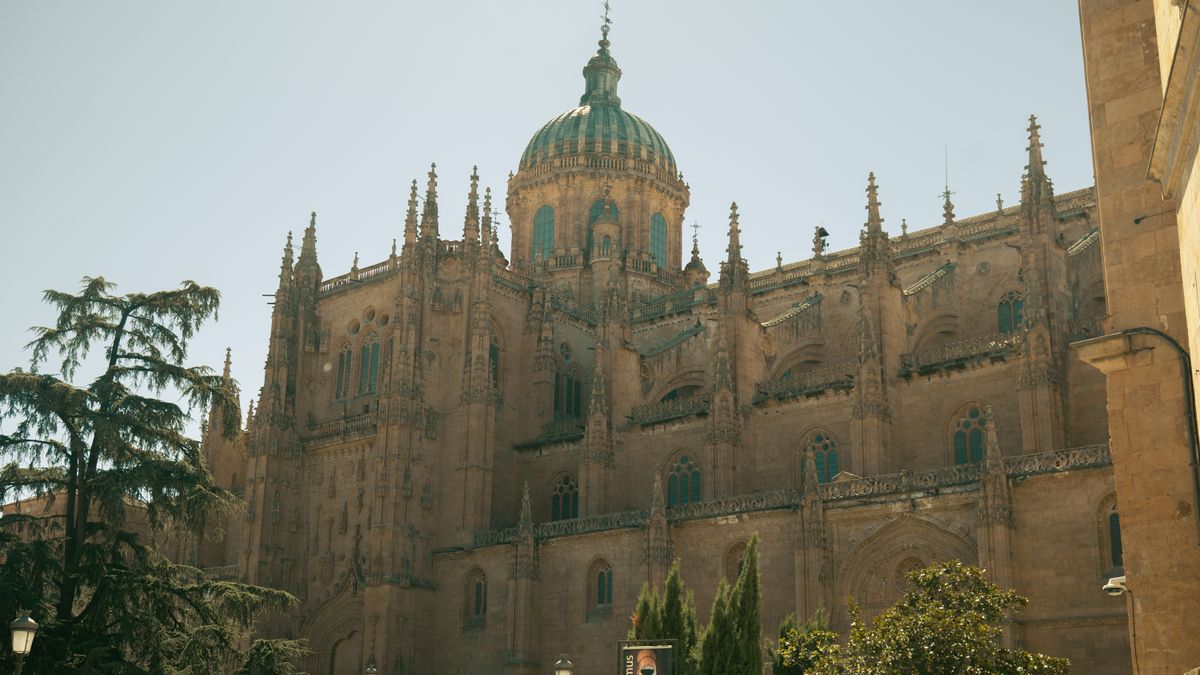
The Old and New Cathedrals
Salamanca has two cathedrals standing side by side, sharing a cloister, the Romanesque Old Cathedral and the larger Gothic New Cathedral built alongside it. Look for the carved astronaut on the New Cathedral’s facade, a genuine addition from a 1992 restoration rather than a medieval original.
The Ieronimus Towers
A climb up these cathedral towers gives some of the best panoramic views in the city, taking in the university, Plaza Mayor and the rooftops of the old town together.
Casa de las Conchas
The House of Shells, a fifteenth century mansion decorated with more than three hundred carved stone scallop shells, now houses a public library inside.
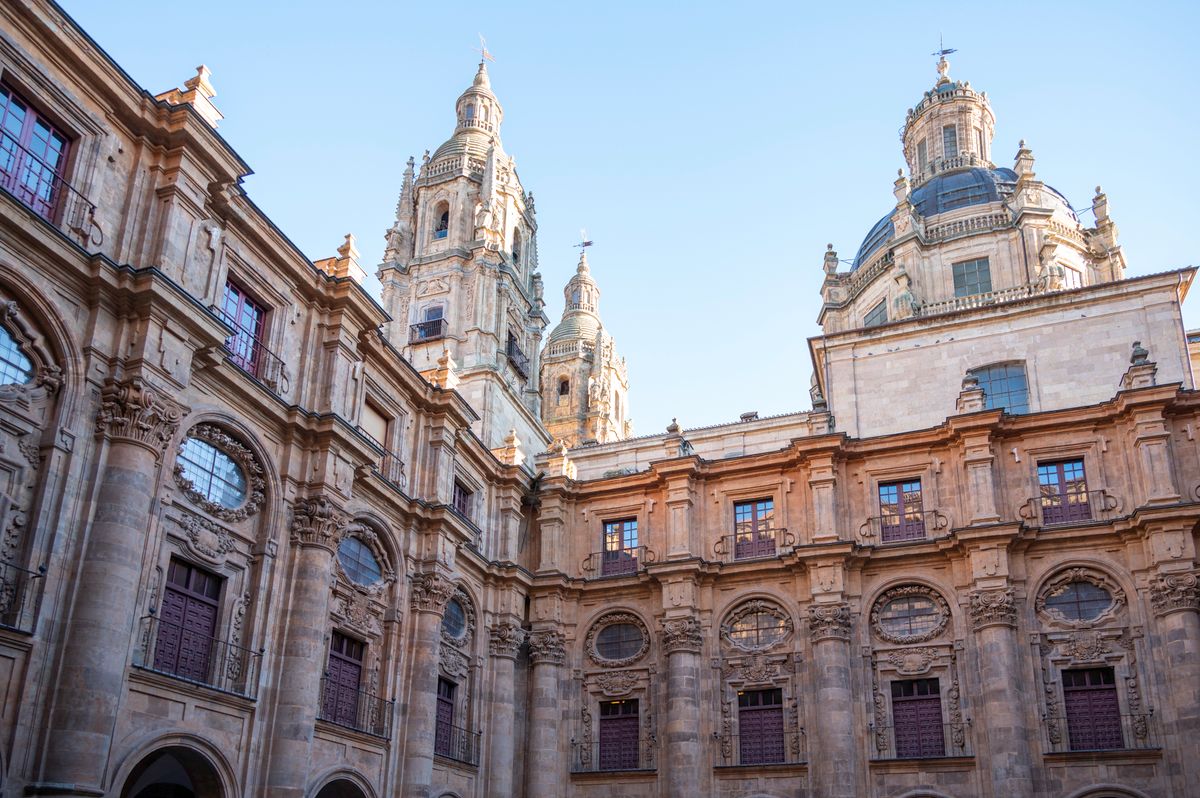
La Clerecia
A Baroque church with twin towers belonging to the Pontifical University, the Scala Coeli towers offer another good vantage point over the city, a slightly less dramatic alternative to the Ieronimus Towers.
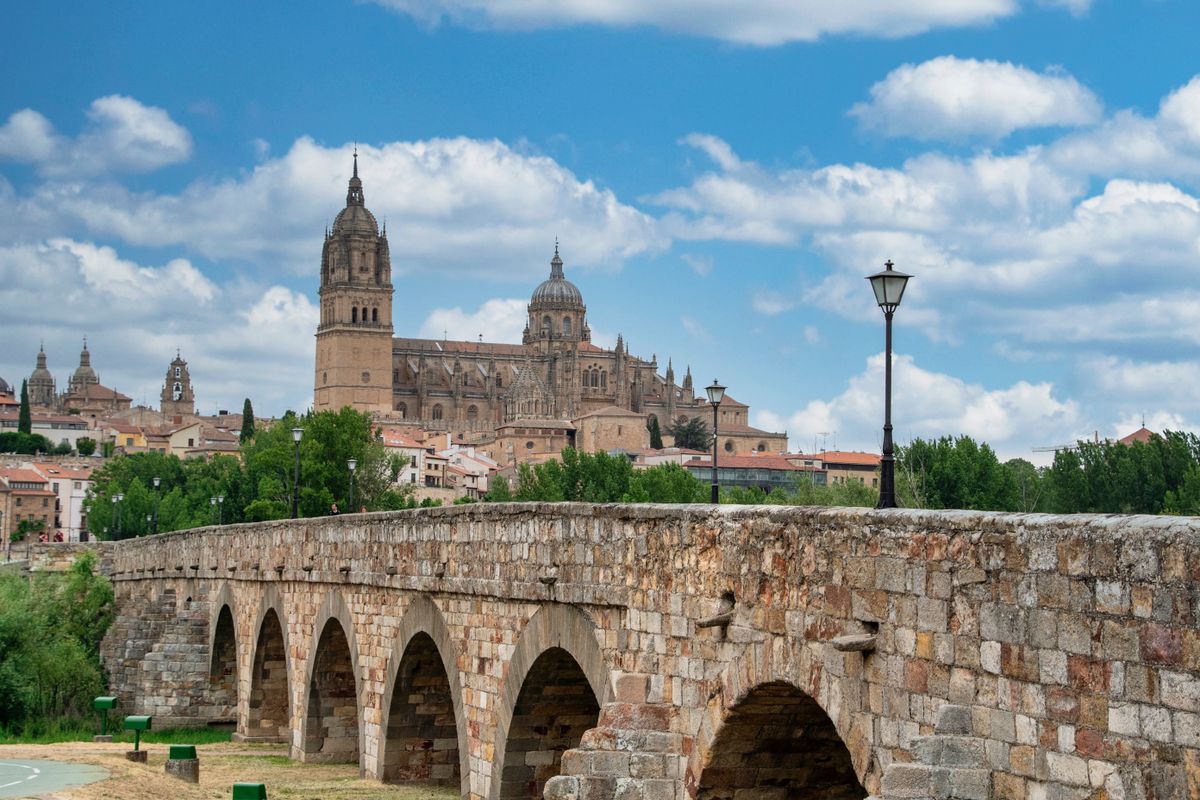
The Roman Bridge
Salamanca’s Puente Romano crosses the Tormes river on foundations dating back to the first century, and the view back towards the old town from the far bank is one of the best in the city.
Casa Lis, the Art Nouveau and Art Deco Museum
A striking glass fronted mansion housing a collection of Art Nouveau and Art Deco pieces, a good change of pace from the medieval and Renaissance architecture that otherwise dominates the city.
Plaza de Anaya
A sweeping square between the cathedral and university buildings, especially atmospheric after dark when the surrounding architecture is lit up, and a natural gathering point for walking tours.
A meal of hornazo
Salamanca’s distinctive meat pie, filled with chorizo, pork loin and hard boiled egg, traditionally eaten on Easter Monday picnics but available year round in the city’s bakeries and restaurants.
Getting Around
Salamanca’s historic centre is compact and easily explored on foot, with most major sights within twenty minutes’ walk of Plaza Mayor. For day trips further into Castilla y Leon, a hire car or train gives the most flexibility.
Practical Tips
The university’s carved frog and the cathedral’s carved astronaut are both popular things to hunt for, worth knowing about before you visit so you know what you are looking for rather than discovering it by accident. Term time brings a livelier, busier atmosphere than the quieter summer holiday months.
Travel Life Tips!
The carved astronaut on Salamanca’s New Cathedral looks medieval at first glance but is actually a modern addition from a 1992 restoration, added by a stonemason as a personal touch and now one of the most photographed details on the whole building. It sits alongside more traditional carvings including a dragon eating an ice cream cone, another later addition that has become something of a local in joke.
Book It
See our Castilla y Leon Travel Guide for the full region, and our guides to Segovia and Avila for more of Castilla y Leon.
…
Love a golden old city?
Head south with our Seville Travel Guide.
…