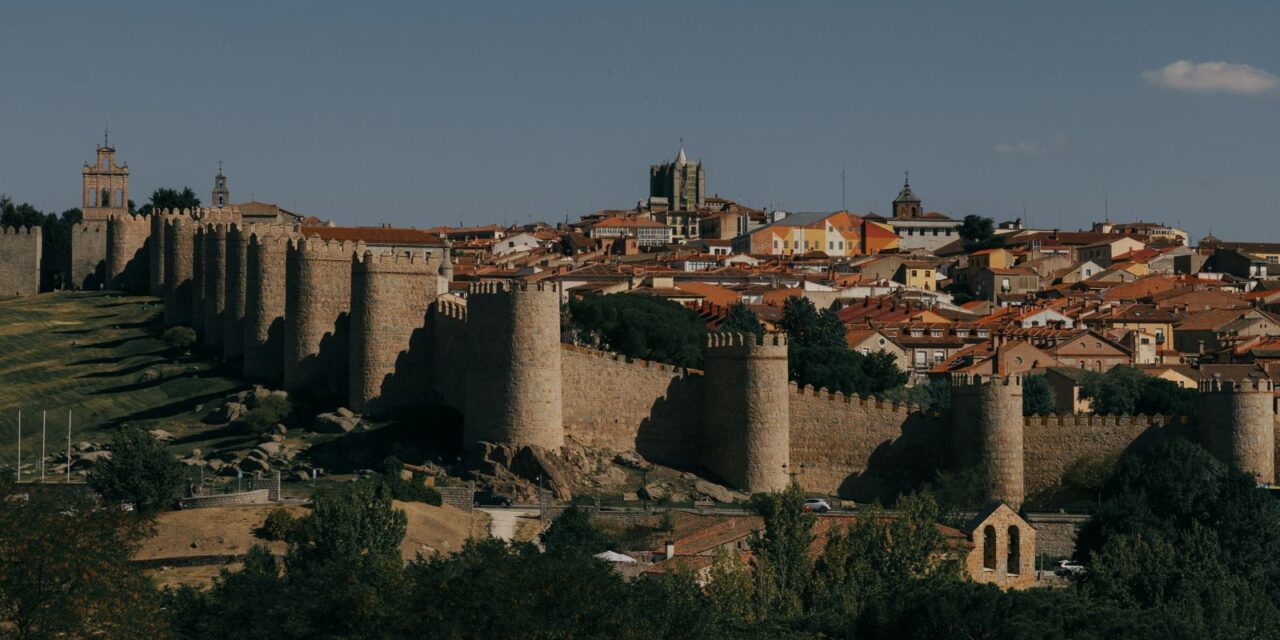
So you want to visit Avila? Known locally as the city of stones and saints, Avila is enclosed entirely by medieval walls dating to the eleventh century, widely considered the best preserved in Spain and possibly in Europe, a genuinely striking sight whether you are arriving by road or seeing them lit up at night from outside.
Within those walls sits a small, intact medieval town that has changed remarkably little, and a deep connection to Saint Teresa of Avila, the sixteenth century mystic and reformer born here, whose legacy still shapes much of what there is to see and do. It is compact enough to see properly in a day, and atmospheric enough that most visitors wish they had allowed longer.
AT A GLANCE
Capital of the region
Avila is not the regional capital, that is Valladolid, but it is the capital of Avila province.
Language
Spanish, spoken throughout with English common around the main tourist sites.
Currency
Euro.
Flight time from the UK
There is no airport in Avila itself, so the usual route is to fly into Madrid, around two and a half hours from the UK, and continue by train, a journey of just over an hour.
Best time to visit
May, June, September and October offer the most comfortable weather for walking the city walls and exploring on foot. Avila sits over a kilometre above sea level, making it noticeably cooler than Madrid, and winters here can bring genuine snow.
Time difference
One hour ahead of the UK.
Climate and Weather
Avila has a continental climate sharpened by its elevation, with hot summer days but cool evenings even in July and August, and cold winters that regularly bring snow. It is consistently one of the coolest provincial capitals in Spain given its altitude.
Getting There
Madrid is the practical gateway, with direct flights from a wide range of UK airports, followed by a train journey of just over an hour to Avila, making it an easy day trip or short stay from the capital.
TOP TEN THINGS TO DO
The city walls
Avila’s medieval walls, built between the eleventh and thirteenth centuries, stretch for roughly two and a half kilometres around the old town and are widely regarded as the best preserved in Spain. A section is open to walk along for a modest fee, giving views over the rooftops and out towards the surrounding countryside.

Los Cuatro Postes
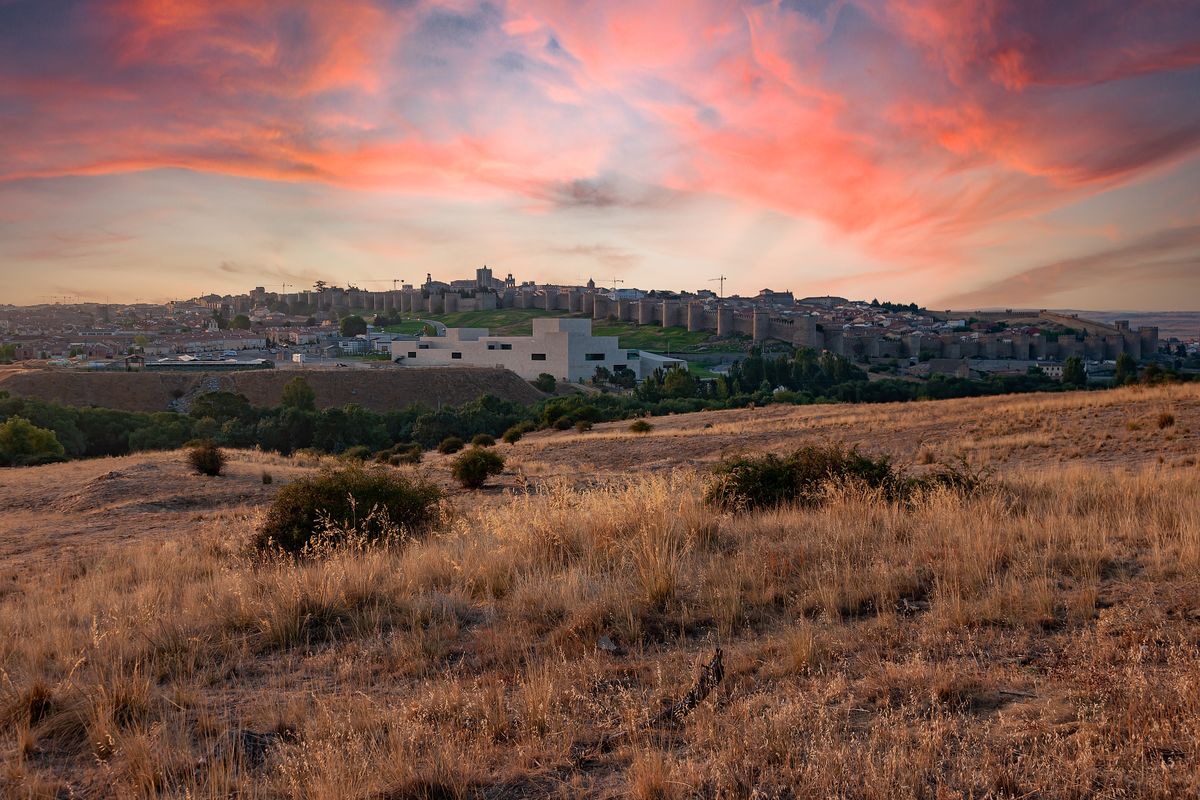
A viewpoint around ten minutes’ walk outside the walls, offering the classic postcard view of Avila’s fortifications in full, particularly striking when the walls are illuminated in the evening.
Avila Cathedral
The first Gothic cathedral built in Spain, notable for being partly built into the city walls themselves, giving it an unusually fortress like character for a place of worship.
The Basilica of San Vicente
A Romanesque church just outside the walls, holding the cenotaph of Saints Vicente, Sabina and Cristeta, and one of the finest examples of Romanesque architecture in the region.

The Convent of Santa Teresa
Built on the site of Saint Teresa’s birthplace, this convent houses a small museum dedicated to her life alongside an elaborately decorated chapel, the natural starting point for exploring her legacy in the city.
Plaza del Mercado Chico
Avila’s cosy central square within the walls, surrounded by the town hall and the Church of San Juan, and a pleasant spot for a coffee away from the more monumental sights.
The Monastery of the Incarnation
Where Saint Teresa lived as a nun for close to thirty years, this monastery preserves her cell and the chapel associated with one of her most significant mystical experiences.
Yemas de Santa Teresa
Avila’s signature sweet, made from egg yolk and sugar and named after the city’s patron saint, best tried freshly made at one of the long established shops in the old town.
The Convent of San Jose
The first convent founded by Saint Teresa, in 1562, known for its austere, unembellished architecture that reflects the reformed Carmelite order she established.
A local chuleton
Avila is well known within Spain for the quality of its beef, and a chuleton, a large grilled steak, is worth building a meal around alongside the more famous sweets and saintly sites.
Getting Around
Avila’s entire walled old town is compact and easily explored on foot, with most major sights within a short walk of each other. Los Cuatro Postes and other viewpoints just outside the walls are also within easy walking distance.
Practical Tips
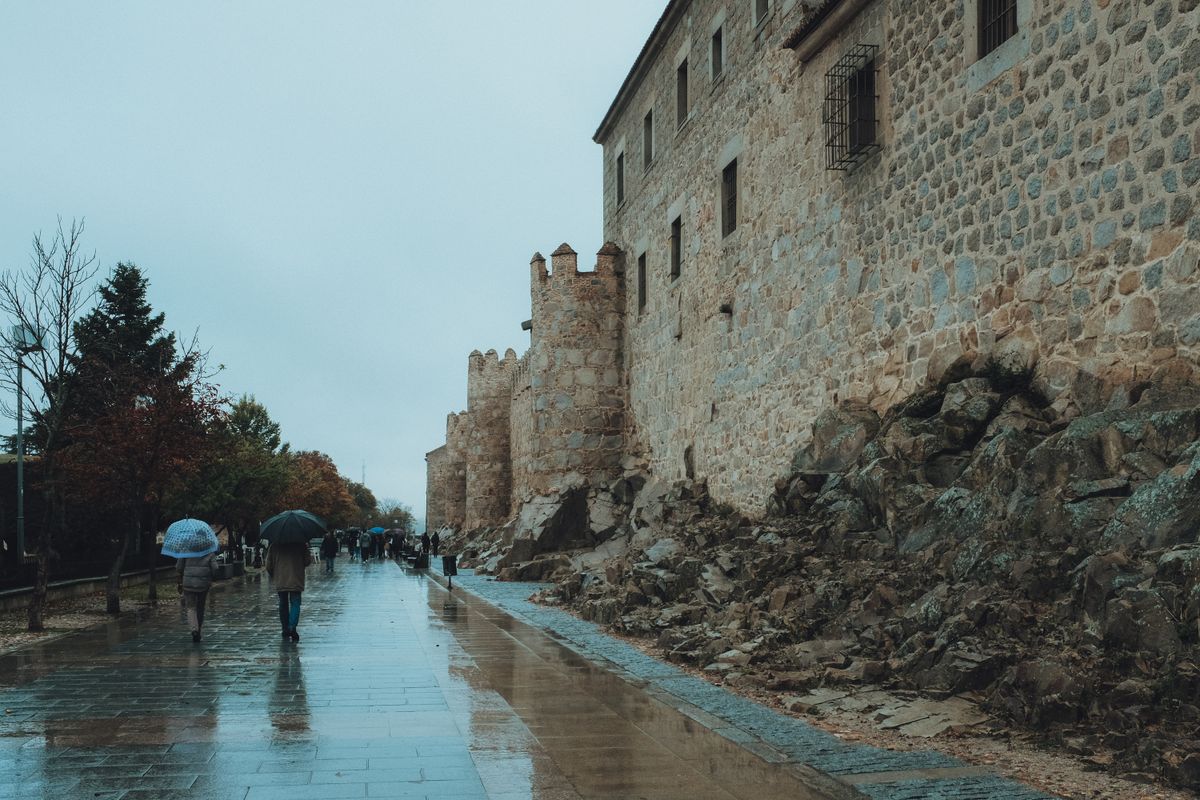
Bring a layer even in summer, Avila’s elevation keeps evenings notably cooler than lower lying parts of Spain. If visiting in winter, be prepared for genuinely cold conditions and the possibility of snow.
Travel Life Tips!
Avila is said to have the highest number of churches per capita of any city in Spain, a legacy of its deep religious history that goes well beyond its association with Saint Teresa alone. Wandering beyond the handful of headline sights turns up Romanesque and Gothic churches on almost every street, most with no queue at all.
Book It
See our Castilla y Leon Travel Guide for the full region, and our guides to Segovia and Salamanca for more of Castilla y Leon.
…
More saints and pilgrims?
Follow the Camino to its end with our Santiago de Compostela Travel Guide.
…