Most British travellers who have set foot in Slovakia did it by accident, on a day trip from Vienna that got as far as Bratislava and no further. That is a pity, because the country behind the capital is one of the least crowded corners of central Europe: nine national parks, more castles than anyone has time for, and forests where bears, wolves and lynx still live wild.
It is also easier to reach than it used to be. Direct flights from the UK now serve both ends of the country, Bratislava in the west and Košice in the east, which puts the mountains and the old mining towns within reach of a long weekend. Here are eight places that justify the trip.
Muránska Planina: a sky full of stars
Muránska Planina is one of the quieter national parks, a limestone plateau in the middle of the country, and part of it is a designated Dark Sky Park. With almost no artificial light for miles, the Milky Way is visible to the naked eye. At Nemcová and Predná Hora the park has built what it calls stargazing living rooms: oversized wooden seats set out in the open, made for lying back and looking up. Astronomers lead organised evenings in summer, some of them in English, and places need to be booked.

Muránska Planina National Park. Photo: Martin Šopinec / Slovakia Travel
By day, head for Veľká Lúka, the Great Meadow, where semi-wild Norik Muráň horses graze loose through the summer. At nearby Biele Vody a colony of European ground squirrels is tame enough to feed by hand.
Bears, wolves and lynx
Slovakia is one of the few countries in Europe where all three large carnivores still roam free. The ecotourism outfit Lesmír runs guided excursions into the mountains, in English if you ask, and tailors them to small groups and independent travellers. Nobody can promise a sighting. This is wilderness, not a zoo, but going with a local guide who can read tracks improves the odds a great deal.
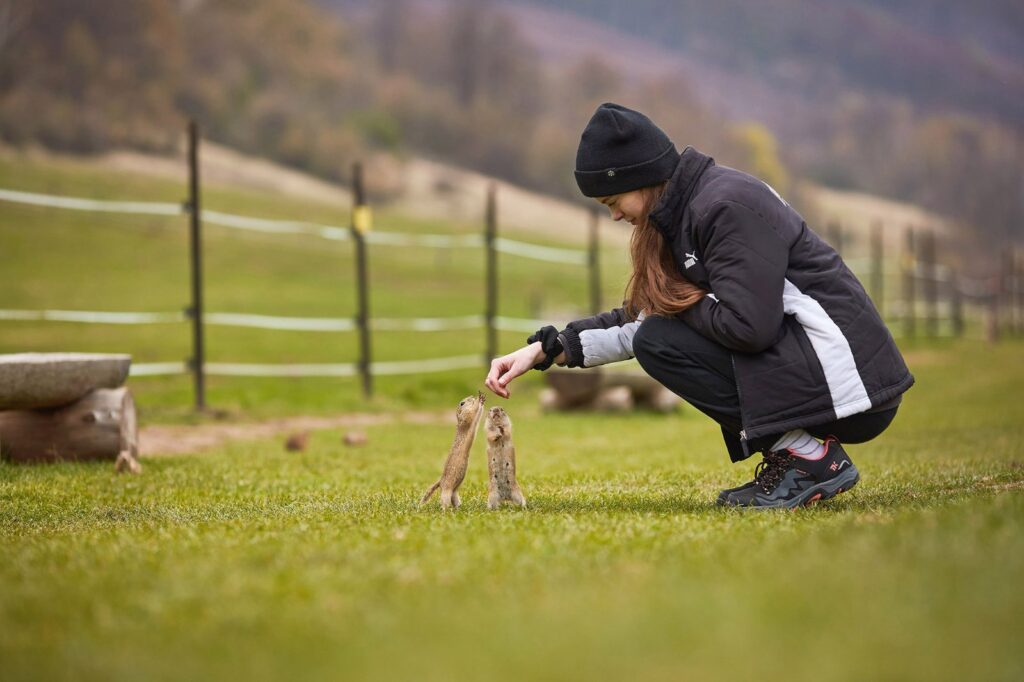
Hand-feeding the European ground squirrels at Biele Vody, Muránska Planina. Photo: Slovakia Travel
Banská Štiavnica: the town where the clock runs backwards
This old silver mining town, a UNESCO World Heritage Site, sits in the bowl of an ancient volcano. Look up at the town hall clock and it appears to be telling the wrong time: the large hand shows the hours and the small hand the minutes. One local story says the clockmaker did it out of spite after the councillors short-changed him.
The town had serious standing in its day. The Mining Academy, founded here in 1762 under Maria Theresa, is often described as the first technical university in the world. Above the rooftops, the Baroque Calvary runs to 24 chapels and churches climbing a hillside, restored since 2008 and worth the walk for the view alone.

The Baroque Calvary above Banská Štiavnica. Photo: Martin Šopinec / Slovakia Travel
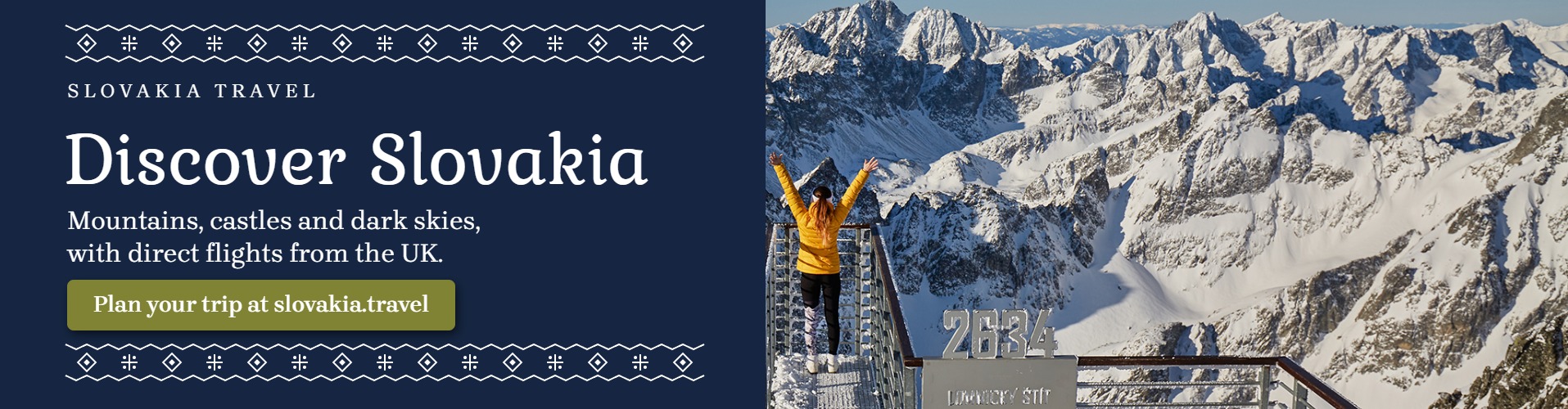
Lomnický štít: a night at 2,634 metres
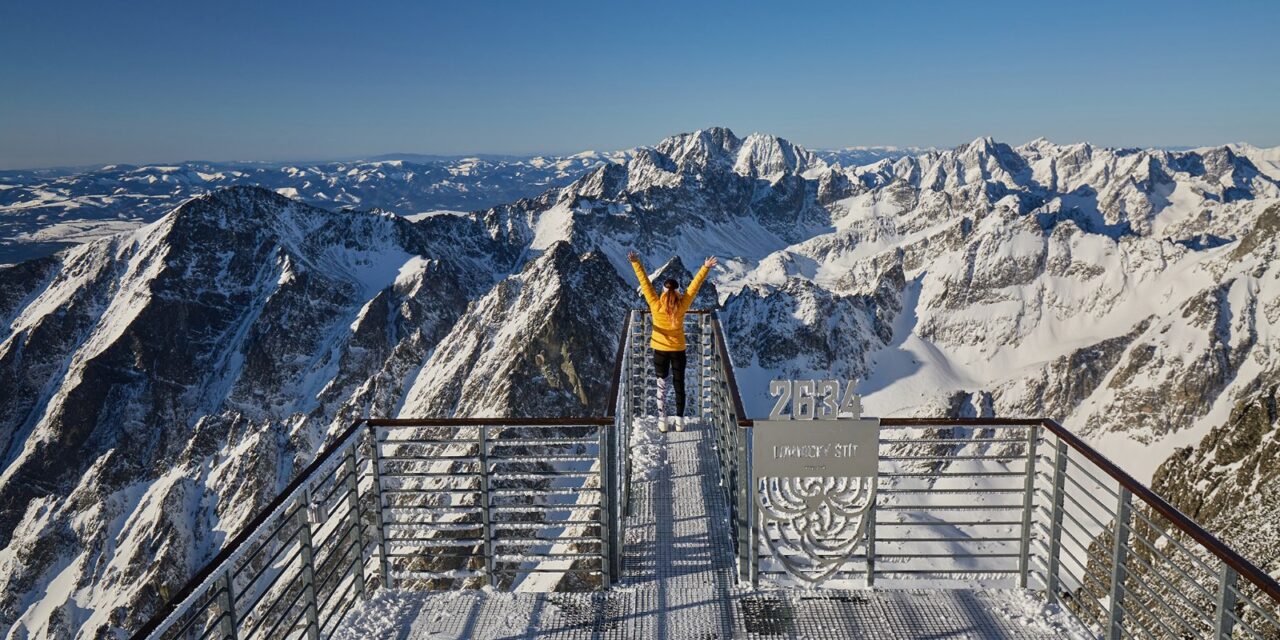
The cable car to the top of Lomnický štít, the second highest peak in the High Tatras, is a fine day out. Staying the night is something else. The summit has just two guest rooms, billed as the highest in Central Europe, and once the last cable car has gone down, guests are left with dinner, silence and a ring of mountains under the stars. It books up well ahead.
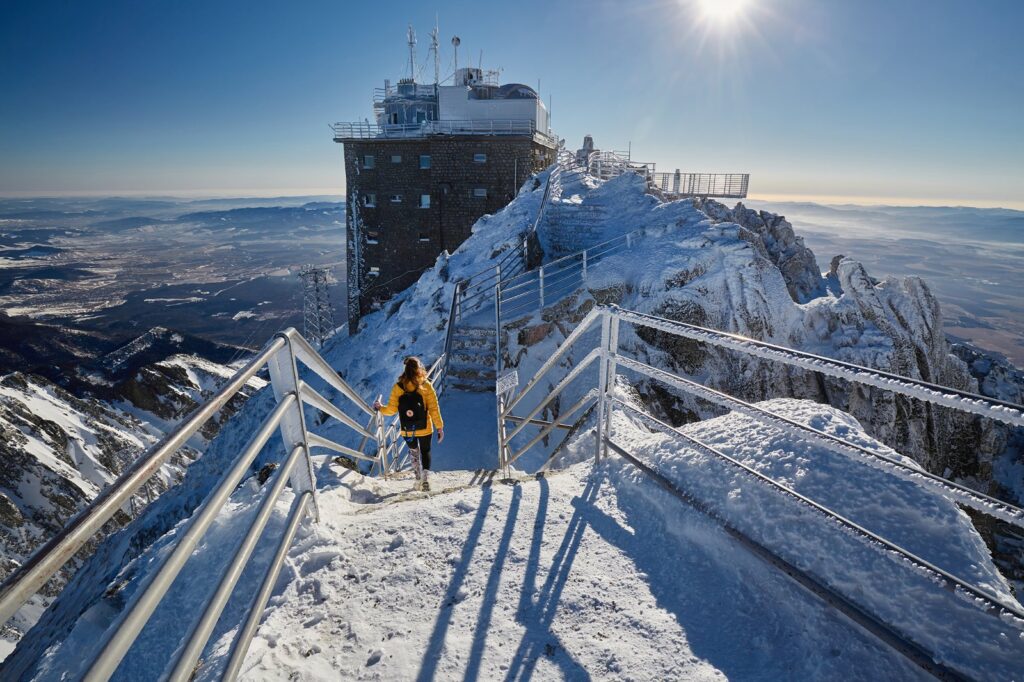
Lomnický štít, 2,634 metres up in the High Tatras. Photo: Martin Šopinec / Slovakia Travel
Spiš Castle
Spread across more than four hectares of clifftop, Spiš is one of the largest castle complexes in Central Europe and a UNESCO site. It held out against the Mongol invasion of 1241 and is said never to have been taken by assault or siege, although it changed hands more than once through betrayal and surrender. A fire in 1780 left the ruin that stands today. Film fans may recognise it from Dragonheart and The Last Legion.
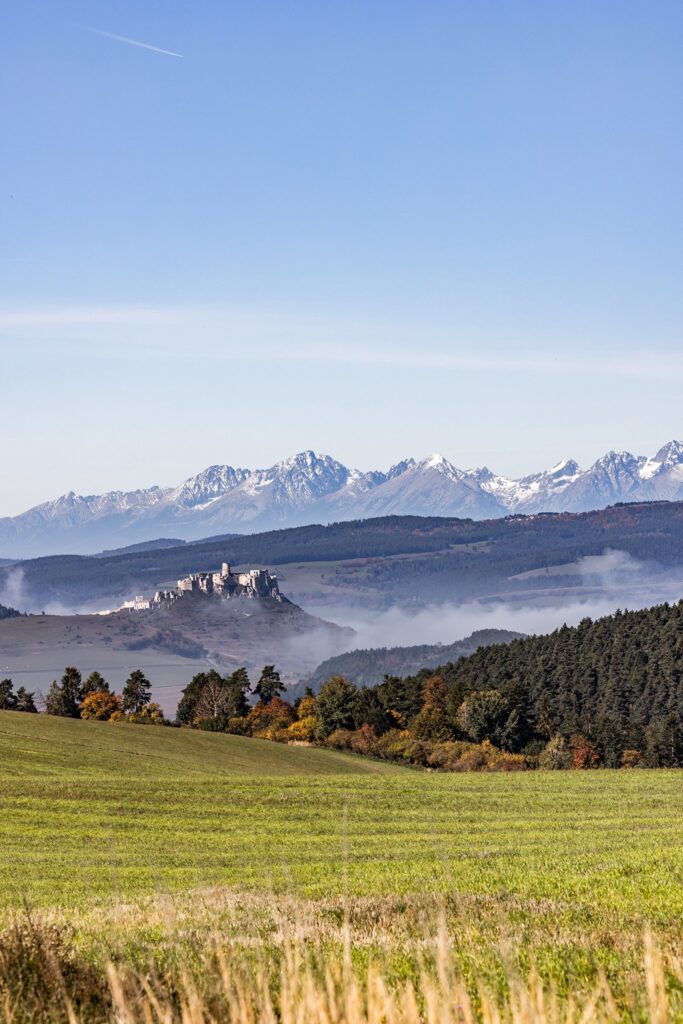
Spiš Castle, a UNESCO World Heritage Site. Photo: Martin Šopinec / Slovakia Travel
The Andy Warhol Museum of Modern Art, Medzilaborce
Andy Warhol liked to say he came from nowhere. His parents came from Miková, a small Rusyn village in the far north east of Slovakia, and his mother Julia, who painted Easter eggs and sang, was a lasting influence on him. The museum in nearby Medzilaborce opened in 1991, before the better known one in Pittsburgh, and holds original works alongside family belongings, including the gown in which he was christened.

The UNESCO-listed wooden church at Kežmarok, in the east of Slovakia. Photo: Martin Šopinec / Slovakia Travel
Bratislava: the UFO and the upside-down pyramid
Bratislava has a pretty Baroque old town, but its most striking buildings date from the socialist years. The SNP Bridge, finished in 1972, crosses the Danube without a single pier in the water, and a saucer-shaped restaurant sits on top of its pylon, 85 metres up. A lift gets you there in under a minute, and sunset is the time to go. Across town, the Slovak Radio building is an inverted pyramid that has been called one of the ugliest buildings in the world and, by architects, one of the cleverest.

The SNP Bridge and its UFO restaurant, with Bratislava Castle behind. Photo: Slovakia Travel
Trenčianske Teplice: a Moorish bathhouse and a vintage tram
One of the oldest spa towns in Slovakia hides a real curiosity. The Hammam, built in 1888 in Moorish style, is all mosaics, marble pillars and glass domes, and it is still used for spa treatments. The town is linked to the main line by a narrow-gauge electric railway that has been running for nearly 120 years. On summer weekends a historic tram works the route.

Inside the Hammam at Trenčianske Teplice, built in 1888. Photo: Spa Trenčianske Teplice
Getting there
For Bratislava and the west, Ryanair flies from London Stansted, Manchester and Edinburgh, with a seasonal service from Leeds Bradford, and Wizz Air flies from London Luton. For Košice, the gateway to the east, Spiš and the High Tatras, Wizz Air flies from London Luton and Ryanair from London Stansted and Liverpool. Routes change with the season, so check with the airline before you plan.
Slovakia is also a reassuringly safe place to travel. It ranked 29th out of 163 countries in the 2026 Global Peace Index, in the top fifth worldwide, and both Bratislava and Košice have compact old towns that are a pleasure to walk around after dark.
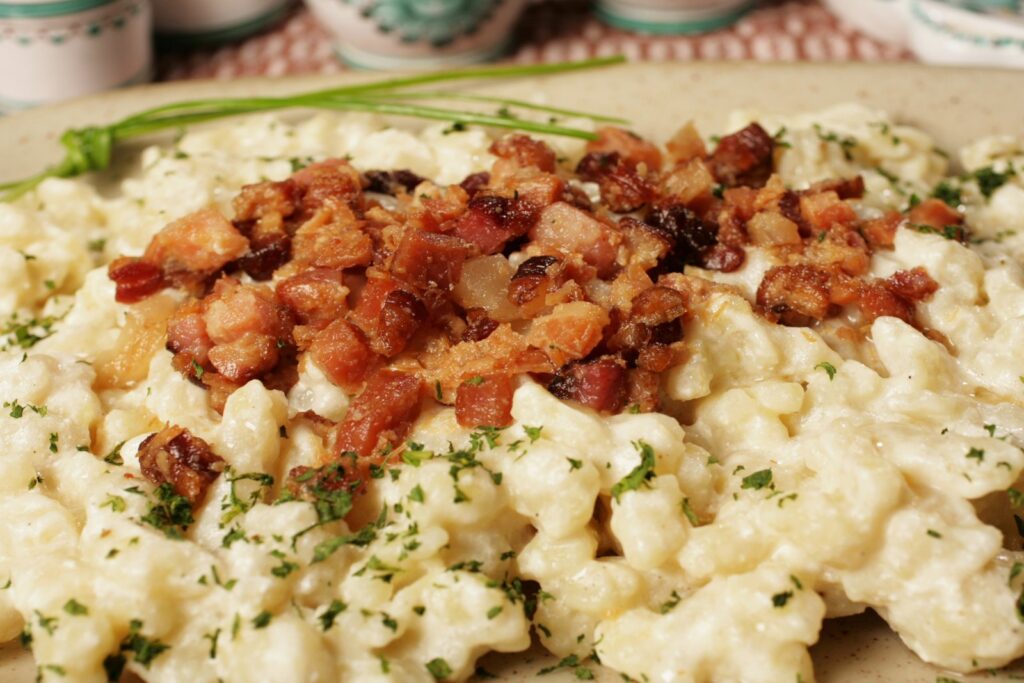
Bryndzové halušky, the national dish. Photo: Simona Čuháková / Slovakia Travel
Travel Life Tips!
Slovakia uses the euro.
Pick your airport by region. Spiš Castle, the High Tatras and the Warhol museum are far closer to Košice than to Bratislava.
Book the stargazing evenings and the two summit rooms on Lomnický štít well in advance.
Order bryndzové halušky at least once. The national dish is potato dumplings with soft sheep cheese and crisp bacon, and it is better than it sounds.
Banská Štiavnica is hilly and cobbled. Bring proper shoes.
For more ideas and help planning a trip, visit Slovakia Travel at slovakia.travel.
…