So you want to visit Seville? Andalucia’s capital does a decent job of living up to every cliche going about southern Spain, orange trees lining Baroque squares, flamenco spilling out of small bars late into the night, and heat in summer that genuinely has to be experienced to be believed.
Underneath the postcard version is a serious historic city, home to the largest Gothic cathedral in the world and a royal palace still in occasional use by the Spanish royal family more than a thousand years after it was begun. Seville rewards slow walking and long lunches rather than a checklist approach, though it does have to be said its two headline sights are worth planning your whole day around.
AT A GLANCE
Capital of the region
Seville is the capital of the autonomous region of Andalucia.
Language
Spanish, spoken with the strong Andalucian accent typical of the region. English is common around the main sights but less reliable elsewhere.
Currency
Euro.
Flight time from the UK
Around two and a half hours direct to Seville airport, which has flights from a good number of UK airports, particularly in summer.
Best time to visit
Spring, especially April, is the classic time to visit, coinciding with Seville’s week long Feria de Abril, though accommodation gets booked out and expensive around it. Autumn, particularly October, offers similarly mild weather with fewer crowds. Summer is extreme, Seville is one of the hottest cities in Western Europe, with temperatures regularly above 40 Celsius in July and August.
Time difference
One hour ahead of the UK.
Climate and Weather
Seville has a Mediterranean climate pushed to an extreme, with summers that are intensely hot and largely dry, and temperatures that can climb well past 40 Celsius in July and August. Winters are mild by comparison, generally in the mid teens during the day, with rainfall concentrated between November and February.
Getting There
Seville airport sits around ten kilometres from the city centre, with a bus service, taxis and car hire all available. Seville is also connected to Madrid and Cordoba by Spain’s AVE high speed rail network, useful if you are combining cities without flying between them.
TOP TEN THINGS TO DO
Seville Cathedral and La Giralda
The largest Gothic cathedral in the world, built on the site of a former mosque and completed in 1507, with the Giralda bell tower, a converted minaret, offering sweeping views over the city from the top. One ticket covers both, and it is worth allowing a couple of hours to do it justice.

The Real Alcazar
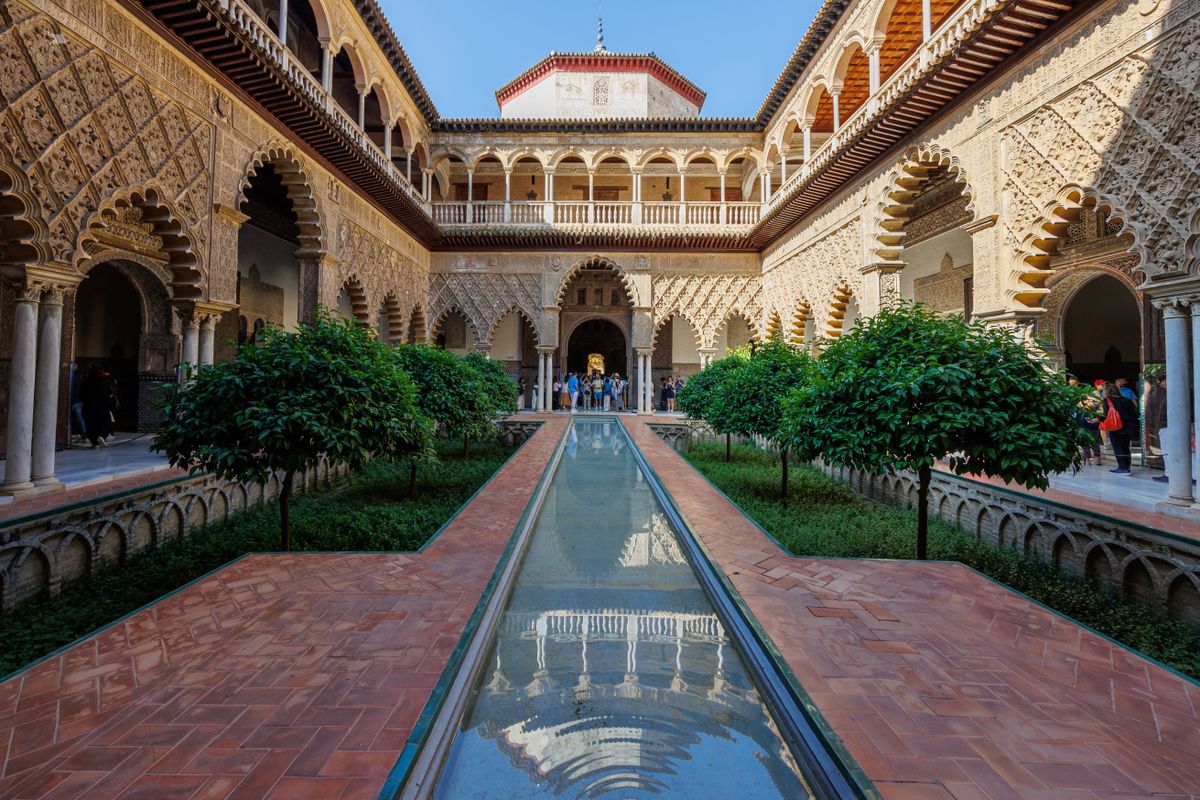
A Mudejar palace begun in the tenth century and expanded by successive Moorish and Christian rulers, still occasionally used by the Spanish royal family today. The gardens are as much a reason to visit as the palace rooms themselves, and tickets are worth booking well in advance since visitor numbers are capped.
Barrio Santa Cruz
The old Jewish quarter, a warren of narrow streets, whitewashed houses and flower filled patios just behind the cathedral. The best approach is to leave the main tourist route and wander the smaller side streets without much of a plan.
Las Setas de Sevilla
A striking modern timber structure in the old town, officially called the Metropol Parasol, with a rooftop walkway that comes into its own at sunset, followed after dark by a coloured light show.

Plaza de Espana
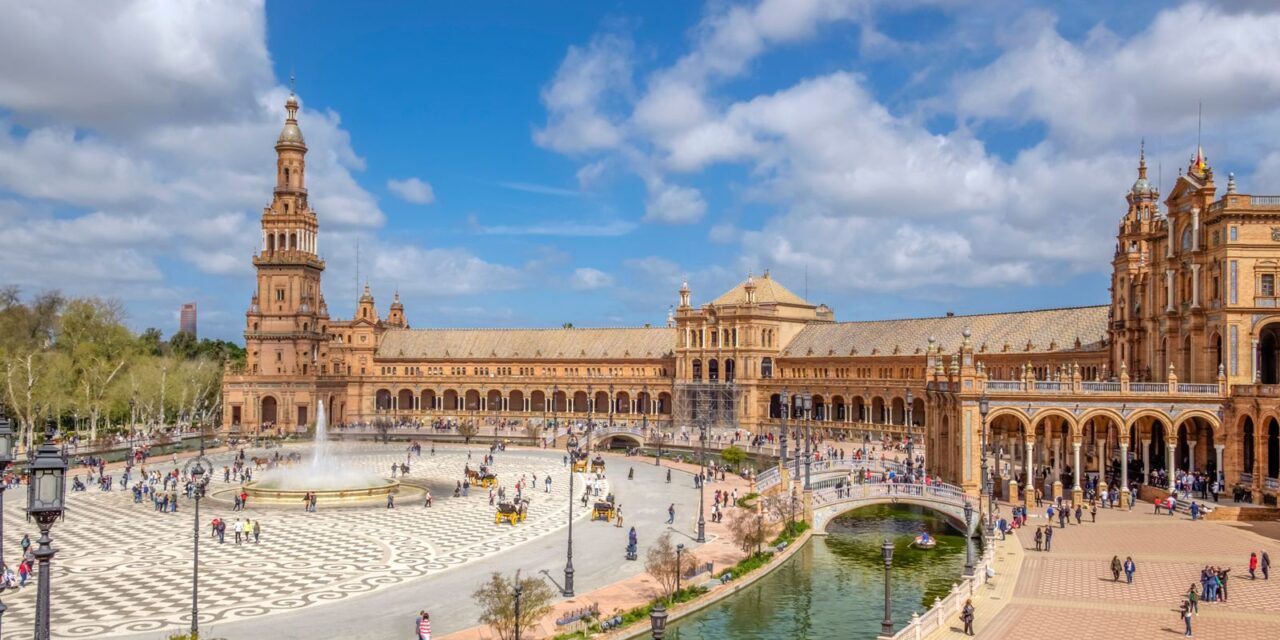
A vast semicircular plaza built for the 1929 Ibero-American Exhibition, its tiled alcoves representing each Spanish province, and one of the most photographed spots in the city.
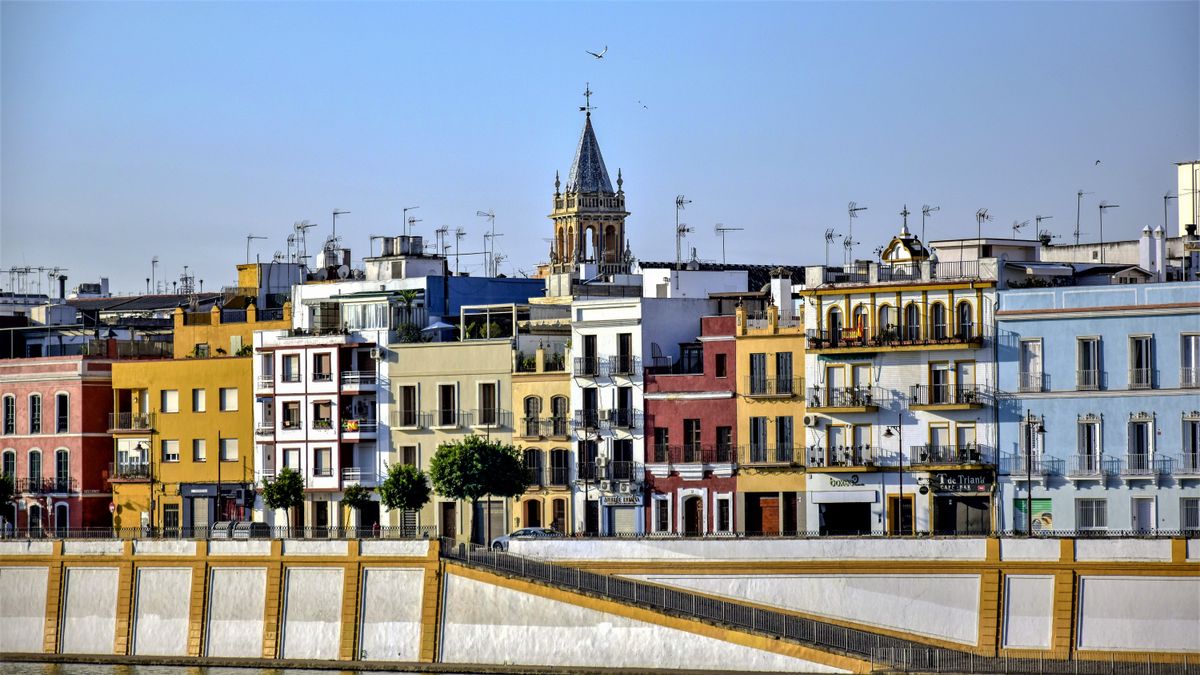
Triana
Across the river from the historic centre, Triana is Seville’s traditional ceramics and flamenco quarter, and gets skipped by many first time visitors despite being worth a half day in its own right.
A flamenco show
Seville is one of the genuine homes of flamenco, and a proper seated show at a venue like Casa del Flamenco gives a far better sense of the art form than the tourist oriented dinner shows found around the main sights.
Casa de Pilatos
A sixteenth century palace blending Italian Renaissance and Spanish Mudejar styles, quieter than the Alcazar but similarly rich in courtyards and tiled detail.
A Guadalquivir river cruise
A relaxed way to see the city from the water, taking in the Torre del Oro and the bridges connecting the centre to Triana, and a good option if you want a break from walking in the heat.
A day trip to Italica
The Roman ruins at Italica, birthplace of the emperor Trajan and, allegedly, of Hadrian, sit a short drive from Seville and include a well preserved amphitheatre, a good half day out for anyone with an extra day in the city.
Getting Around
Central Seville is compact and best explored on foot, particularly the old town and Barrio Santa Cruz, where streets are often too narrow for cars anyway. A bike hire scheme covers the wider city, and a tram and bus network fills in the gaps for longer distances. Taxis are widely available and reasonably priced.
Practical Tips
Book the Real Alcazar well in advance, particularly in spring and autumn, since visitor numbers are limited and it sells out regularly. Dress modestly for the cathedral, covering shoulders and knees. In high summer, plan sightseeing for the morning and evening and rest through the hottest part of the afternoon, in keeping with local custom.
Travel Life Tips!
Seville’s Feria de Abril, held roughly two weeks after Easter, is such a major event locally that much of the city effectively pauses for it, with a dedicated fairground of over a thousand private and public marquees, known as casetas, set up specifically for the week. Getting into a private caseta generally requires a personal invitation, but the public ones and the surrounding streets are open to everyone.
Book It
See our Inland Andalucia Travel Guide for the full region, and our guides to Granada and Cordoba for more of inland Andalucia.
…
Love a city that lives to eat?
Spain’s north does it differently. Read our San Sebastian Travel Guide.
…