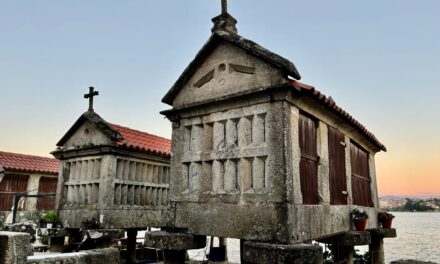
So you want to visit Galicia? Tucked into Spain’s northwestern corner, above Portugal and facing the Atlantic, this is a region that upends most of the usual assumptions about Spanish travel, green and rain fed rather than sun baked, with its own language, Galego, and a Celtic heritage its people are genuinely proud of.
Santiago de Compostela, its ancient capital, has been drawing pilgrims along the Camino de Santiago for well over a thousand years, and the city’s medieval core remains one of the most atmospheric in the country. Beyond Santiago, Galicia’s dramatic coastline, the Rias Baixas, and its excellent seafood have quietly made it one of Spain’s most rewarding regions for anyone willing to look past the more obvious southern resorts.
AT A GLANCE
Capital of the region
Santiago de Compostela is the capital of Galicia.
Language
Spanish and Galego, the Galician language, both official. Galego is a distinct Romance language closely related to Portuguese, and most Galicians speak both it and Spanish fluently.
Currency
Euro.
Flight time from the UK
Direct UK flights to Galicia are limited, so many visitors either fly into Santiago de Compostela or A Coruna where schedules allow, or connect via Madrid or Barcelona. Where direct flights run, the flight time is around two and a half hours.
Best time to visit
June to September brings the warmest, driest weather, though Galicia’s Atlantic climate means rain is possible at any time of year. May and early October, when the Camino de Santiago is busy but not overcrowded, also make a good compromise.
Time difference
One hour ahead of the UK.
Climate and Weather
Galicia has a distinctly Atlantic climate, mild, green and considerably wetter than the rest of Spain, closer in character to Ireland or the west of the UK than to Andalucia. Summers are warm rather than hot, generally in the low twenties Celsius, and rain is a genuine possibility year round, though it eases noticeably between June and September.
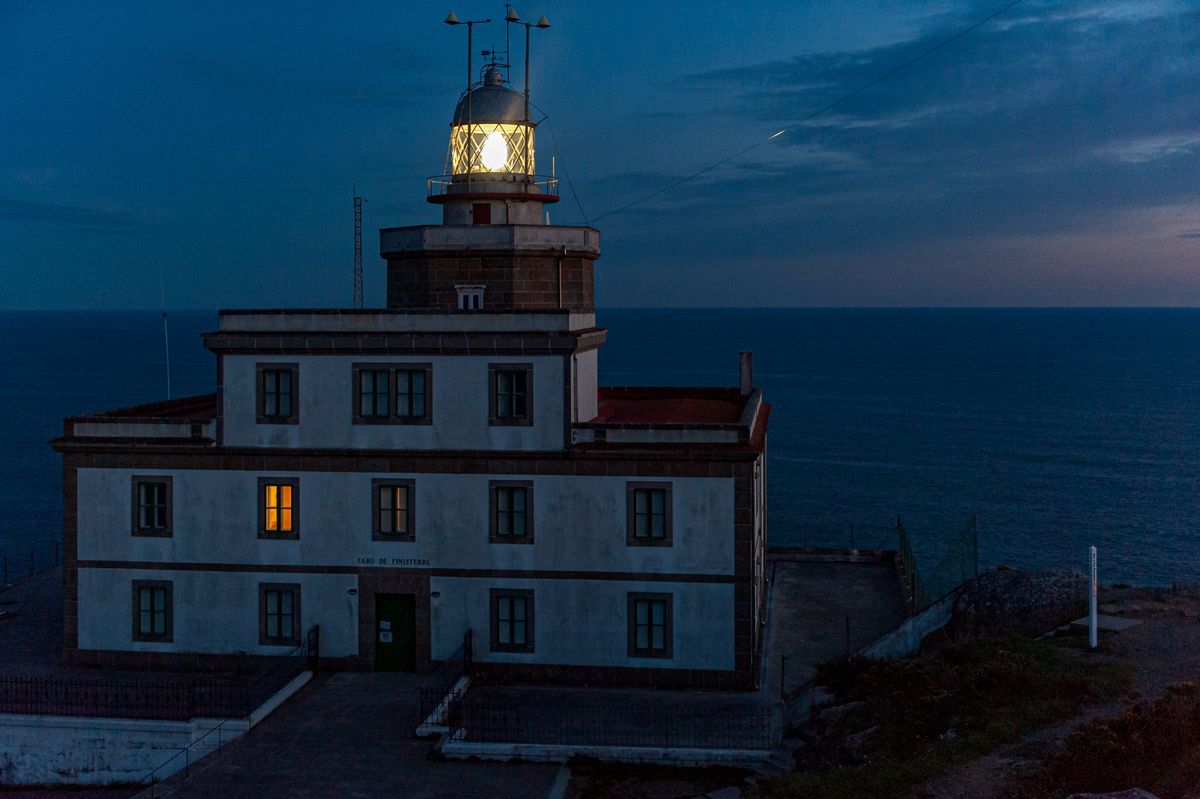
Getting There
Santiago de Compostela, A Coruna and Vigo all have their own airports, though direct UK flight schedules can be limited outside peak season, so connecting via Madrid or Barcelona is often necessary. High speed rail now connects Madrid to Santiago de Compostela in as little as three hours, and ferries also reach northern Spain from the UK via Bilbao or Santander, with a road journey on from there.

CHOOSE YOUR DESTINATION
Santiago de Compostela
Galicia’s capital and the destination of the Camino de Santiago, a UNESCO listed medieval city built around a cathedral said to hold the remains of the apostle Saint James. See the full Santiago de Compostela guide.

Pontevedra and the Rias Baixas
A beautifully preserved small city at the heart of Galicia’s most scenic stretch of coastline, the Rias Baixas, known for its estuaries, beaches and some of Spain’s best seafood. See the full Pontevedra guide.

Famous Sons and Daughters
Pablo Picasso spent his formative teenage years, from age ten to around fourteen, in A Coruna, where his father taught at the school of fine arts, a period he later credited with shaping his early development as an artist. The Nobel Prize winning novelist Camilo Jose Cela, author of The Family of Pascual Duarte, was born in the Galician town of Iria Flavia in 1916.
Getting Around
Trains connect Galicia’s main cities reasonably well, with the journey from Santiago de Compostela to Vigo taking around an hour. For the smaller towns, villages and coastline of the Rias Baixas, a hire car is by far the most practical option, since bus services thin out considerably away from the main routes.
Practical Tips
Pack for rain whatever the season, Galicia’s Atlantic climate means it can arrive with little warning even in summer. If walking any part of the Camino de Santiago, book accommodation ahead during the busy May, June, September and early October window, when the trail is at its most popular.
Travel Life Tips!
Galicia is often described locally as the most superstitious part of Spain, with a long tradition of witchcraft folklore, healers known as meigas, and rituals still practised in some rural areas today. It sits alongside the deep Catholic pilgrimage tradition of the Camino in a way that visitors from elsewhere in Spain often find genuinely surprising.
Book It
See our full guides to Santiago de Compostela and Pontevedra and the Rias Baixas for more detail on each destination.
…
Like your Spain green and Atlantic?
Head along the coast with our Basque Country Travel Guide.
…