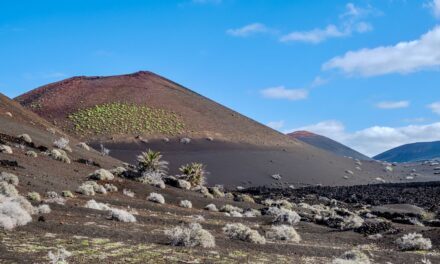

So you want to visit Gran Canaria? Locals call it the miniature continent, and once you have driven from desert-like dunes in the south to pine forest and volcanic peaks in the centre in under an hour, you will understand why.
Very few islands this size pack in quite so much contrast, or quite so many plants and creatures found nowhere else on Earth.
AT A GLANCE
Capital of the island
Las Palmas de Gran Canaria.
Language
Spanish.
Currency
Euro.
Flight time from the UK
Around four to four and a half hours.
Best time to visit
All year round, though spring brings the best flowering out in the countryside.
Time difference
None. The Canary Islands share the UK’s time zone year round, since clocks change on the same dates in both places.
Climate and Weather
Gran Canaria’s nickname as the miniature continent comes from its climate as much as its landscape. The south around Maspalomas is reliably hot and dry, the centre is noticeably cooler in the pine forested highlands, and Las Palmas in the north sees more cloud, sometimes all on the same day. July and August are hottest and busiest, particularly around the southern resorts, while spring and early autumn offer fewer crowds and more comfortable walking weather.
Getting There
Direct flights run from most major UK airports to Gran Canaria Airport, with a typical flight time of four to four and a half hours. Budget and charter carriers serve the route year round, and prices are generally lowest outside the school holiday periods.
Where to Stay
The south of the island, around Maspalomas, Playa del Ingles and Puerto Rico, is built for resort holidays and has the most reliable sunshine and the greatest concentration of hotels. Las Palmas de Gran Canaria in the north swaps guaranteed sun for city life, with Playa de las Canteras giving visitors a proper beach without leaving the capital.
TOP TEN THINGS TO DO
Maspalomas Dunes
Walk among the rippling 400 hectare reserve in the south that most visitors assume drifted over from the Sahara. It did not, the sand is crushed shell and coral ground down by the sea over thousands of years, and the reserve is also one of the last strongholds of the endemic Gran Canaria giant lizard, which can grow to 80cm long.
Playa de las Canteras
Swim at the three kilometre city beach in Las Palmas, protected by La Barra, a natural volcanic reef that breaks the Atlantic swell and turns the water behind it into a calm, clear pool.
Vegueta
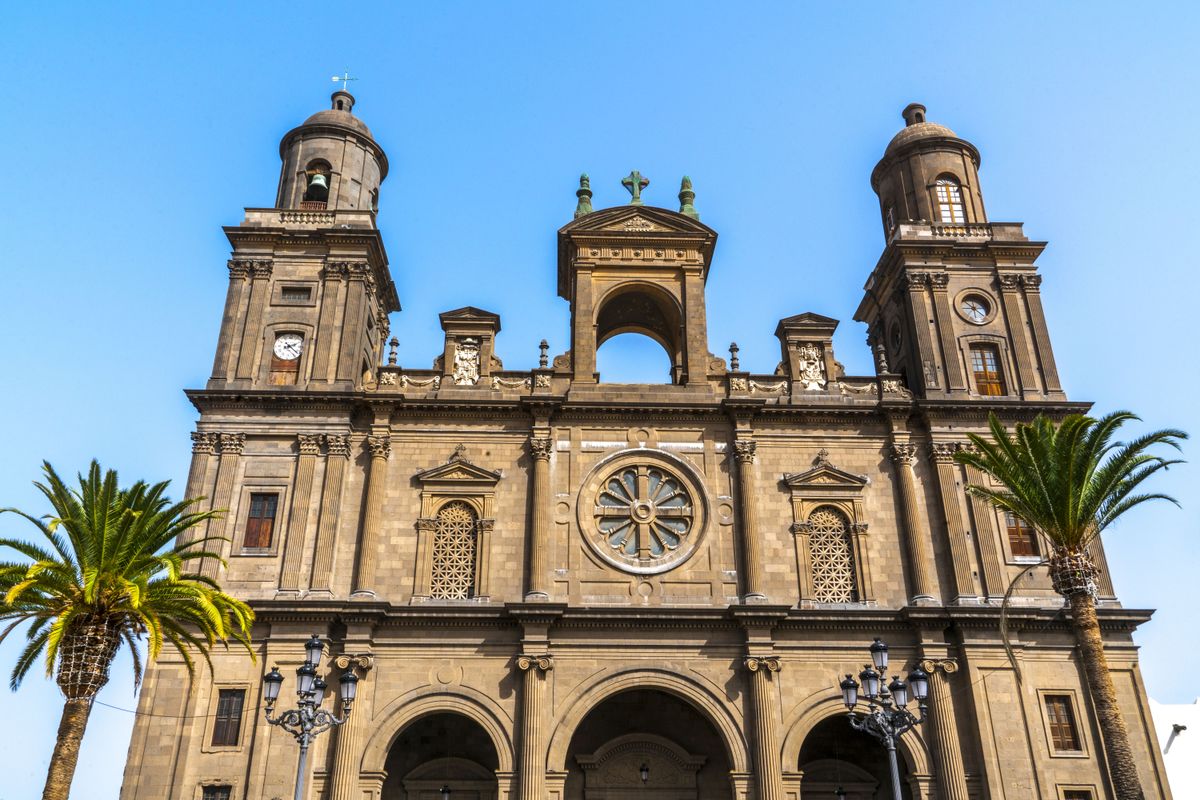
Wander the old quarter of Las Palmas, laid out in 1478. Casa de Colon marks the governor’s house where Columbus is said to have repaired his ship before crossing the Atlantic in 1492, though some Canarian historians argue the Columbus connection was dramatised for tourism decades later.
Roque Nublo
Hike to the 80 metre basalt monolith at 1,813 metres that was a sacred site for the island’s pre-Hispanic inhabitants. The trail climbs through Canary pine forest, a tree adapted to survive wildfire by resprouting from blackened trunks, and on a clear day the summit view stretches across to Mount Teide on Tenerife.

Barranco de Guayadeque
Explore a ravine where around seventy cave dwellings are still lived in and a couple of restaurants are carved straight into the rock. Bring binoculars, the ravine is also good ground for spotting the island’s birdlife.
Teror
Visit on a Sunday, a hilltop town of carved wooden balconies and home to the Basilica of the Virgin of the Pine, patron saint of the island. A market selling chorizo, cheese and local crafts sets up around the church every Sunday morning.
Puerto de Mogan
Stroll a fishing harbour nicknamed Little Venice for the canal running through its centre. It is quieter outside Fridays, when the town’s weekly market takes over the marina.

El Cabron Marine Reserve
Snorkel or dive off the coast, particularly around this reserve in the southeast, where more than 400 fish species have been recorded in a relatively small stretch of water.
Tejeda Caldera
Drive up into the huge eroded crater at the island’s centre, and stop in the whitewashed village of Tejeda itself for views across to the Roque Bentayga rock formation.
Pozo Izquierdo
Watch or try windsurfing on the southeast coast, known locally as the Home of the Wind. It has hosted a leg of the professional windsurfing world tour every year since the late 1980s.
Getting Around
A hire car is the easiest way to see the island’s contrasts in a single day, with a well-maintained road network reaching the interior villages. A public bus network, run by Global, also connects the main towns and resorts for those without a car.
Practical Tips
UK passport holders do not need a visa for stays of up to ninety days. Entry rules for Europe are changing, though, so check the latest Foreign Office advice for Spain before you travel. Gran Canaria is generally considered safe for tourists, with the usual precautions around belongings in busy resort areas. Tipping is appreciated but not obligatory, with ten per cent a fair guide in restaurants.
Travel Life Tips!
Locals in Las Palmas call the low cloud that often blankets the capital in the mornings la panza del burro, the donkey’s belly. It usually burns off by midday, so a grey start in the city is rarely a sign of a washout day.
Book It
See our Canary Islands Travel Guide for the full archipelago, and our guides to Tenerife, Lanzarote and Fuerteventura for more of the islands.
…
Somewhere special to stay?
Read about the new sleep programme at Salobre Hotel Resort & Serenity in the hills of southern Gran Canaria.
…